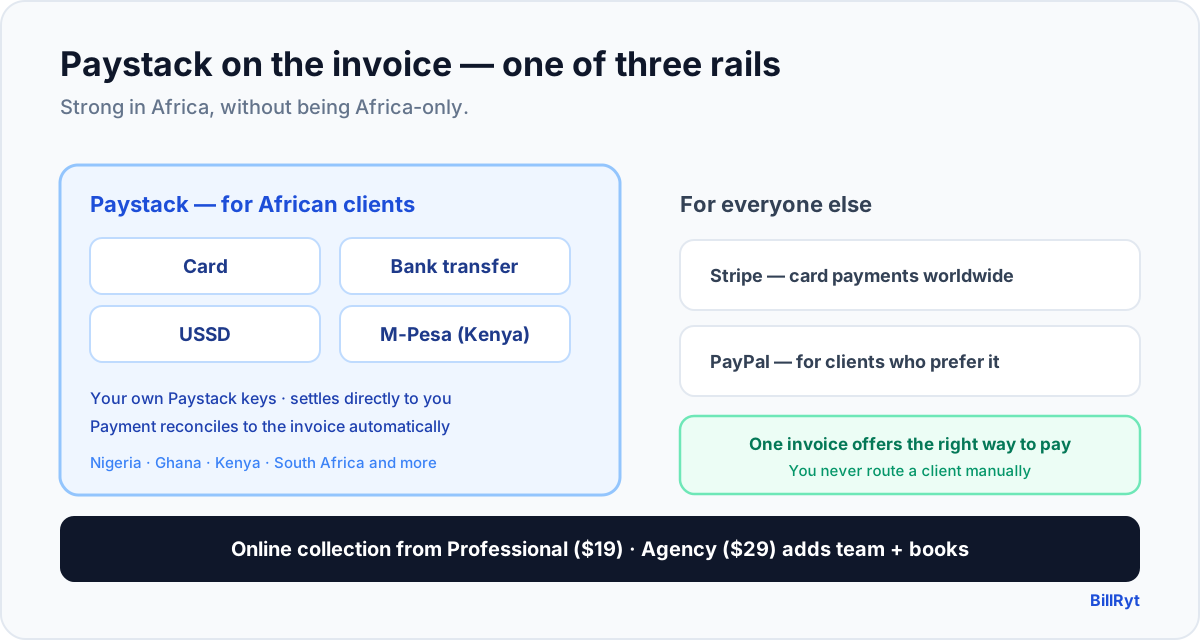
Paystack is how a large part of Africa pays online, so if any of your clients are in Nigeria, Ghana, Kenya or South Africa, invoice software that integrates Paystack is not a nice-to-have — it is the difference between a client paying in two taps and a client promising to "send it later." But here is the framing that matters: Paystack is one rail on a platform built for the whole world. BillRyt gives you Paystack for your African clients and Stripe and PayPal for everyone else, on the same invoices. This is how the Paystack integration works, and where it sits in a genuinely international setup.
What the Paystack integration does
Connect your own Paystack account once, and every invoice you send can be paid through Paystack's checkout without the client leaving the document. Through Paystack, your clients can pay by:
- Card — local and international.
- Bank transfer — the everyday default across much of Africa.
- USSD — for clients paying without a banking app open.
- M-Pesa — for clients in Kenya, the way most of the economy moves money.
Because you use your own Paystack keys, money settles directly to your Paystack balance at Paystack's standard rate, and BillRyt never takes a cut. The payment is initiated from the invoice, so BillRyt records it against that exact invoice and marks it paid — no manual matching, no month-end reconciliation guesswork.
Paystack is one rail, not the whole platform
This is the part people miss, and the reason BillRyt is not an "Africa-only" tool. Paystack covers your African clients beautifully. For the rest of your client base, BillRyt gives you two more rails on the very same invoices:
- Stripe for card payments from clients anywhere in the world.
- PayPal for clients who prefer to pay that way.
So a single BillRyt account can bill a client in Lagos who pays by Paystack, a client in London who pays by card through Stripe, and a client in Toronto who pays by PayPal — each from their own invoice, each in their own currency, each reconciled in one place. The Paystack integration is the piece that makes you strong in Africa; the platform around it makes you strong everywhere.
Where it fits in your plan
Online payment collection — connecting Paystack (and Stripe and PayPal) and letting clients pay on the invoice — is a paid feature, available from the Professional plan ($19/month) upward. This post recommends Agency ($29/month) because businesses collecting across multiple countries usually also want team seats and included accounting (BillRyt Books), so cross-border payments feed real books. Whichever paid plan you are on, you use your own gateway keys and the checkout-and-reconcile behaviour is identical.
Setting up the Paystack integration
- On a paid plan, open settings and connect your Paystack account with your own keys.
- Send any invoice as usual — the public link now shows a Pay button.
- Your client pays via Paystack checkout (card, transfer, USSD, or M-Pesa in Kenya).
- BillRyt records the payment against the invoice, marks it Paid, and updates your outstanding balance.
There is no separate payment page to build and no reference scheme to invent — the invoice is the checkout. Add Stripe and PayPal the same way to cover clients outside Paystack's reach.
A worked example
You run a design studio with clients in three countries. A Nairobi client owes 120,000 KES, a London client owes 2,400 GBP, and a New York client owes 3,000 USD. You send three invoices in three currencies. The Nairobi client pays by M-Pesa through your Paystack; the London client pays by card through your Stripe; the New York client pays by PayPal. All three invoices flip to Paid automatically, and your dashboard shows each in its own currency without blending them. The Paystack integration handled the African client natively — and the same platform handled the other two without a second tool.
Why this beats a Paystack payment page alone
You can, of course, send clients a bare Paystack payment link. The problem is everything around the payment: you still have to create and track the invoice somewhere else, and when the money arrives you have to match it back by hand. Integrated invoicing removes that entire step — the invoice is where the payment happens, so the reconciliation is automatic. You get Paystack's collection and a real invoicing system in one, instead of stitching two tools together.
Paystack across African markets — and where it stops
Paystack is not a single-country rail. It processes payments for businesses across several African markets, so if your clients span, say, Nigeria and Ghana, one Paystack connection can serve them — each paying by the local methods they know. That reach is part of why it is the natural African rail to build into your invoicing. But it is still an African rail, and that is precisely why you pair it with the others: for a client in the United States or Germany, Paystack is the wrong tool and Stripe or PayPal is the right one. BillRyt lets you stop thinking about which gateway a given client needs — you connect all three, and each invoice simply offers the appropriate way to pay. Your Nigerian and Ghanaian clients go through Paystack; your overseas clients go through Stripe or PayPal; you never have to route anyone manually or apologise for a payment method that does not fit where they live.
In short
Invoice software with Paystack integration should let your African clients pay by card, bank transfer, USSD or M-Pesa straight from the invoice, on your own keys, with the payment reconciled automatically. BillRyt does that — and crucially, it treats Paystack as one rail on a worldwide platform, adding Stripe and PayPal so clients outside Africa pay just as easily on the same invoices. Collection starts on Professional ($19); Agency ($29) adds team seats and included books for businesses billing across borders. You get strong in Africa without becoming Africa-only.
You can start free to build invoices, then connect Paystack, Stripe and PayPal on a paid plan to collect from clients anywhere.