Zoho Invoice is a capable, free invoicing app — credit where it is due. If you already live inside the wider Zoho ecosystem, it can be a sensible choice. But a lot of African businesses land on the search "Zoho invoice alternative with Paystack" for two honest reasons: they want Paystack collection to be first-class, and they want invoicing, payments and accounting to be one focused tool rather than one app in a very large suite. Here is how BillRyt fits.
What Zoho Invoice does well
It is free, clean, and it handles the invoicing basics well. If your needs are purely "send an invoice" and you are comfortable in the Zoho world, it does the job.
Why people look for an alternative
- They want Paystack front and centre. For a business collecting across Nigeria, Ghana or Kenya, the payment rail is the whole point — card, bank transfer, USSD, and M-Pesa in Kenya. If Paystack is the way your clients pay, you want it built in and obvious, not something to wire up.
- They want fewer moving parts. Zoho Invoice is one product in a sprawling suite (CRM, Books, Projects, and dozens more). Powerful if you use all of it; heavier than you need if you just want to bill clients and see your books.
- They want accounting in the same place. Keeping invoicing in one app and accounting in another means exporting and reconciling between them.
What BillRyt gives you
- Paystack, built in. Connect Paystack and your invoices accept card, bank transfer and USSD across Africa — plus M-Pesa for Kenyan clients — settled to your account and recorded against the invoice automatically. Add Stripe for overseas card payments on the same invoice.
- One focused tool. Quotes, proformas, invoices, credit notes, a client portal, automatic reminders — and accounting — in a single product designed around getting paid, not a suite you grow into.
- Accounting included. BillRyt Books gives you double-entry accounting — profit and loss, balance sheet, ledgers — on the Agency and Merchant plans, built from the invoices and payments you already recorded.
- Multi-currency to the core. Bill in NGN, KES, GHS, USD or GBP; the amount, tax and payment page all speak the client's currency.
A quick side-by-side
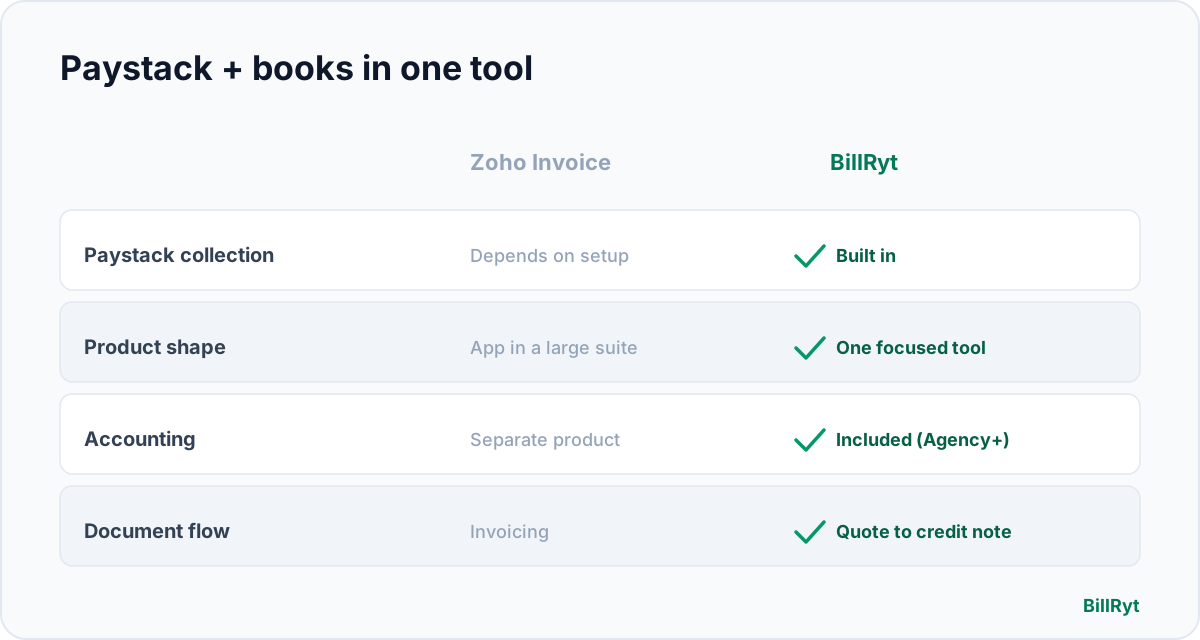
| Zoho Invoice | BillRyt | |
|---|---|---|
| Paystack collection | Depends on your setup | Built in — card, transfer, USSD, M-Pesa (KE) |
| Product shape | One app in a large suite | One focused billing + books tool |
| Accounting | Separate Zoho product | Included on Agency & Merchant |
| Document flow | Invoicing | Quote → proforma → invoice → credit note |
| International cards | Depends on gateway | Stripe, 40+ countries |
Switching without the drama
One tool vs a suite — what that means day to day
The difference is not abstract. In a suite, the thing you do most — invoicing — is one module among many, and the moment you need adjacent capabilities (a client portal, proper books, payment collection) you are often reaching into other apps, other settings screens, sometimes other subscriptions. In a single focused tool, those live together: the invoice, the payment link, the reminder, the credit note and the ledger are the same product with one login and one place to look. For a small team that just wants to bill clients and see the money, fewer moving parts is not a downgrade — it is the point.
A worked example
You invoice a client in Accra 3,000 GHS and a client in Nairobi 20,000 KES the same week. Connect Paystack once, and the Accra client pays by card or mobile money and the Nairobi client pays by M-Pesa — each from their own invoice, each recorded against it automatically, each in its own currency. When you want to know how the month is going, the same tool shows you the books, because invoicing and accounting are not two products stitched together.
Who should stay on Zoho Invoice
To be fair: if you are already deep in the Zoho ecosystem — CRM, Books, the rest — and your payment collection is sorted, staying put may be the right call; the apps are designed to work together. BillRyt earns the switch when you specifically want Paystack-first African collection and included accounting in one dedicated tool, without adopting a suite to get there.
What you don't give up
Switching from Zoho Invoice to a focused tool does not mean dropping to something basic. You keep the things a good invoicing app should have — polished, professional documents, quotes and estimates, taxes handled correctly, recurring invoices, and a clean record of who has paid. What you add on top is the part that matters most for an African business: Paystack collection built into the invoice, M-Pesa for Kenyan clients, Stripe for overseas ones, and real double-entry books in the same product. So it is not a trade of features for simplicity — it is the invoicing you already expected, plus first-class collection and accounting, minus the overhead of navigating a large suite to find them. For a small team, that combination is usually the whole reason to move.
Connect Paystack, send your next invoice through BillRyt, and the next payment lands against it automatically. Add clients as you bill them, connect Stripe if you invoice abroad, and let your books build from real transactions. You keep the simplicity of a dedicated invoicing app and gain first-class African collection plus accounting — without assembling a suite to get there.
In short
Zoho Invoice is a solid, free invoicing app inside a large suite. If you specifically want Paystack collection front and centre, M-Pesa for Kenyan clients, Stripe for overseas ones, and real double-entry books — all in one focused tool with a single login — BillRyt is the more direct route. You keep the invoicing you expect and gain the African collection and accounting the suite makes you assemble. And because it is one product, there is nothing to wire together and nothing to reconcile between apps.